


The right bedroom color combination makes a room feel finished, even with simple furniture. The wrong one makes you want to repaint by Sunday night, so it pays to borrow a palette that already works.
These bedroom color schemes are for anyone choosing paint, bedding or both. Each one names a main color, a partner and an accent, so you can copy it as is or swap one piece for what you already own.
A quick rule before you start: think in a 60-30-10 split. About 60 percent is your wall color, 30 percent is bedding and curtains, and 10 percent is small accents like pillows, lamps and art.
1. Sage green and warm white
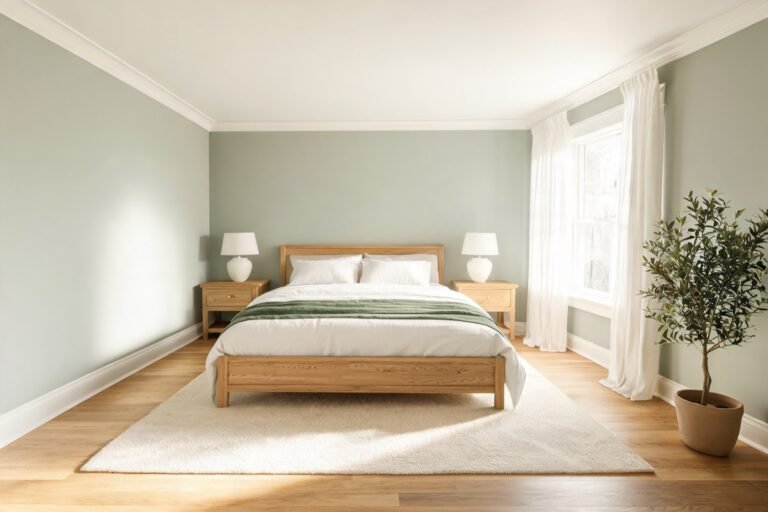
This is the easiest palette here to live with. Soft sage walls, warm white trim and crisp white sheets feel calm in any light.
Add light oak furniture and one terracotta pillow for warmth. Choose a sage with gray in it so it doesn’t read minty. For more ways to use it, see these sage green bedroom ideas.

2. Navy and crisp white
Navy walls with white bedding look sharp and a little nautical without trying. It’s a classic for a reason: navy hides marks and makes white look extra bright.
Add brass bedside lamps and a natural wood bed frame so the room feels warm, not cold. Matte navy on the walls looks richer than satin.

3. Greige and cream
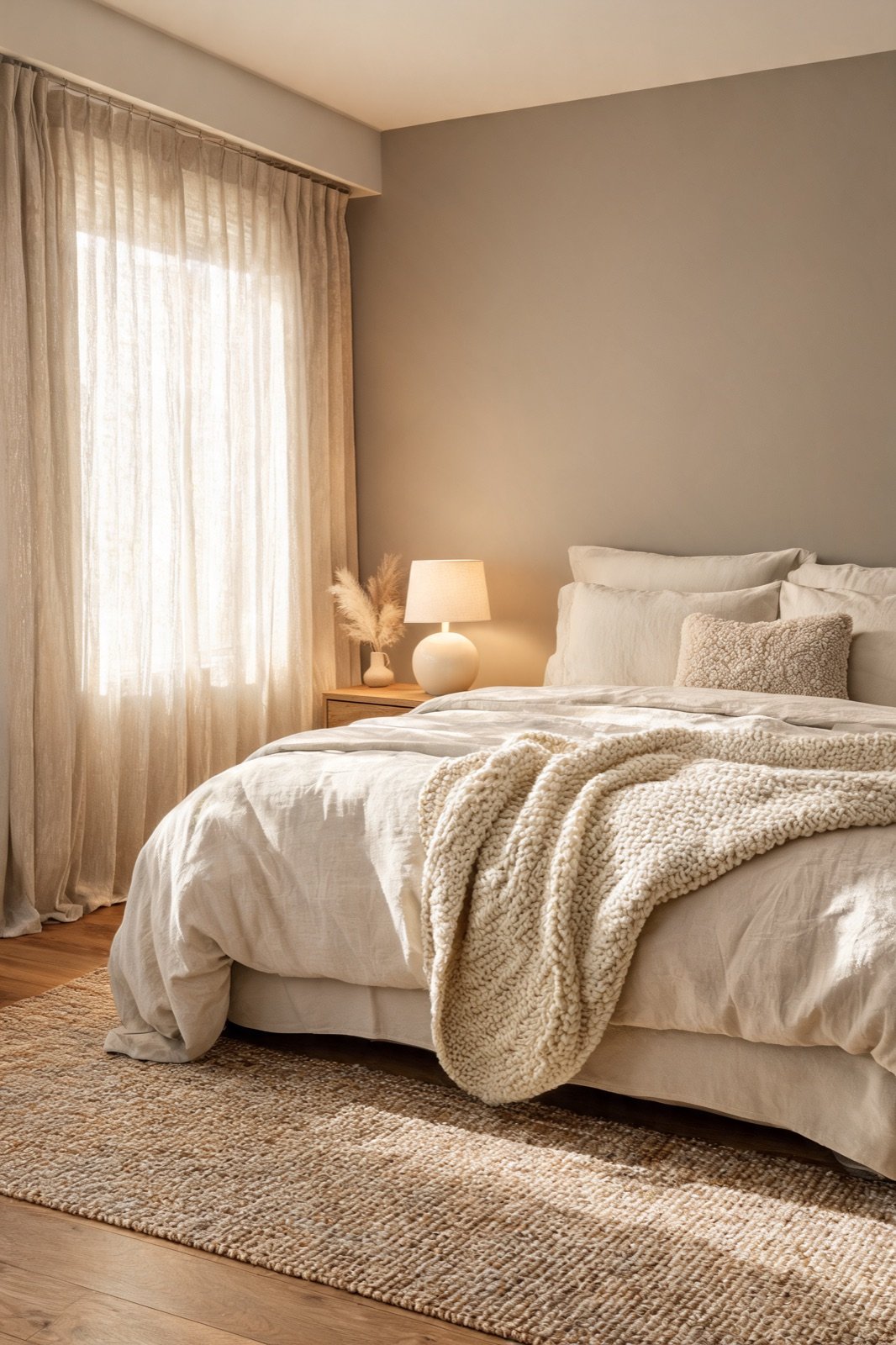
If you want neutral but not boring, pair a warm greige wall with cream bedding and oatmeal linen curtains. Layer textures instead of colors:
- A chunky knit throw
- A nubby boucle pillow
- A jute or wool rug
It’s the kind of palette that suits every season and every style of furniture. Hold your greige sample next to the floor first, since some greiges turn pink or green beside orange oak.
4. Blush pink and charcoal
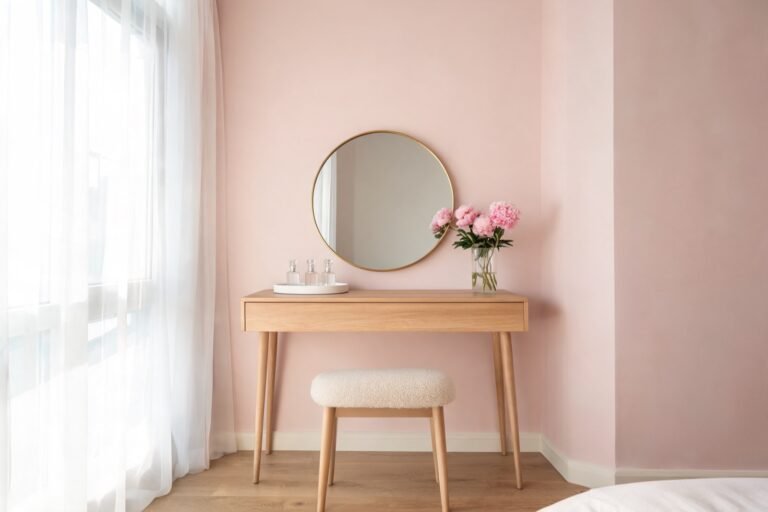
Blush on its own can feel sweet. Paired with charcoal gray, it turns grown up. Try charcoal walls with blush bedding, or soft gray walls with a blush accent wall behind the bed.
Keep metal finishes to black or brass, and skip the ruffles. Plain linen or cotton in blush looks relaxed, not frilly.

5. Terracotta and cream
Terracotta is warm, earthy and lovely in a sunny room. Use it on one wall or in the bedding, then balance it with cream walls and plenty of natural texture.
Rattan, jute, clay pots and raw wood all belong here. A $10 terracotta plant pot on the nightstand ties it together on the cheap.

6. Dusty blue and sand
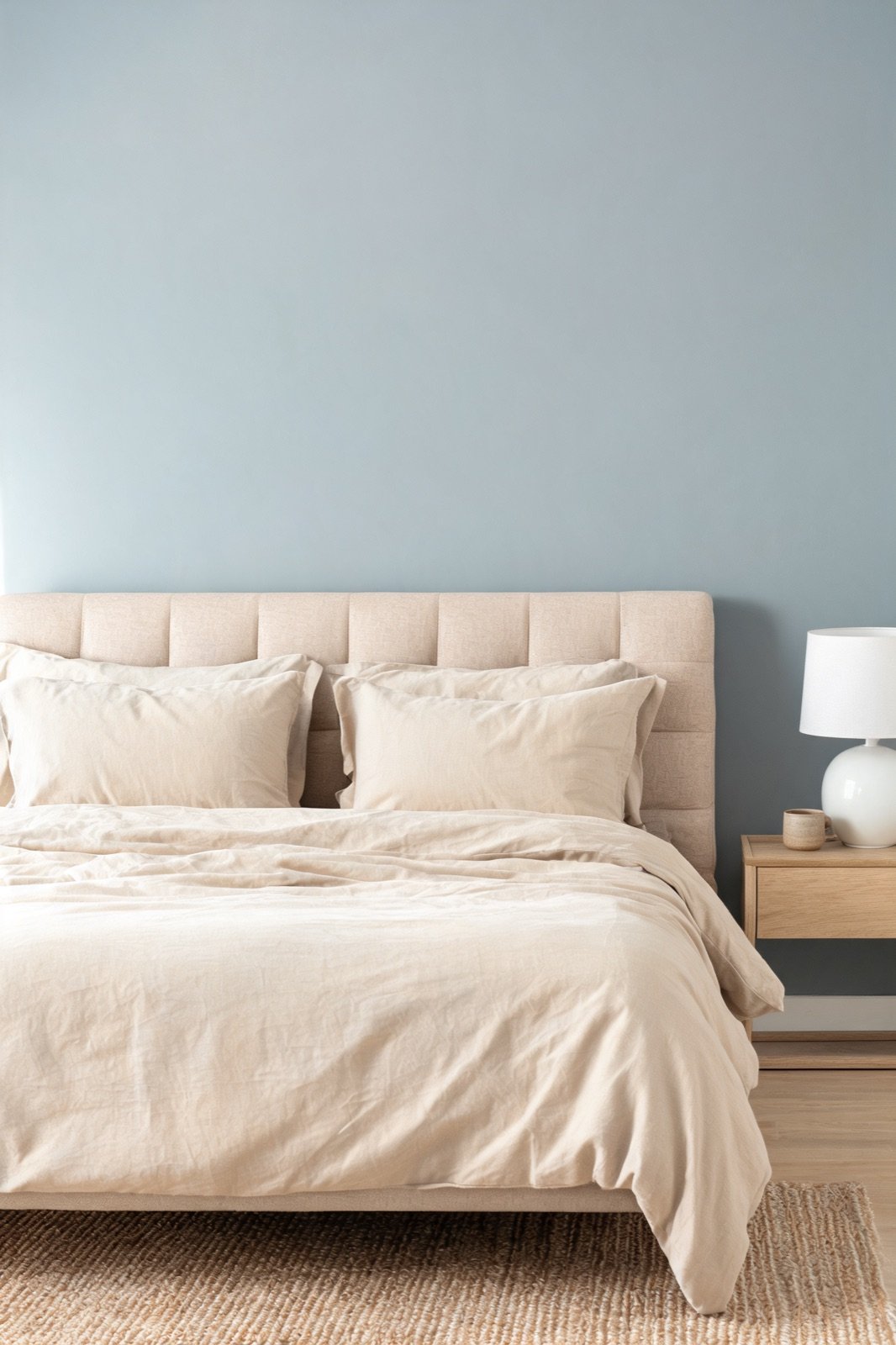
This one feels like a quiet beach morning. Paint the walls a soft, grayed blue and bring in sandy beige bedding, a linen headboard and pale wood.
Avoid bright sky blue, which can look babyish. In a north-facing room, pick a dusty blue with a little warmth in it, since cool light can make gray-blues look icy. Bleached wood and white ceramic lamps finish the look.
7. Black and white with warm wood
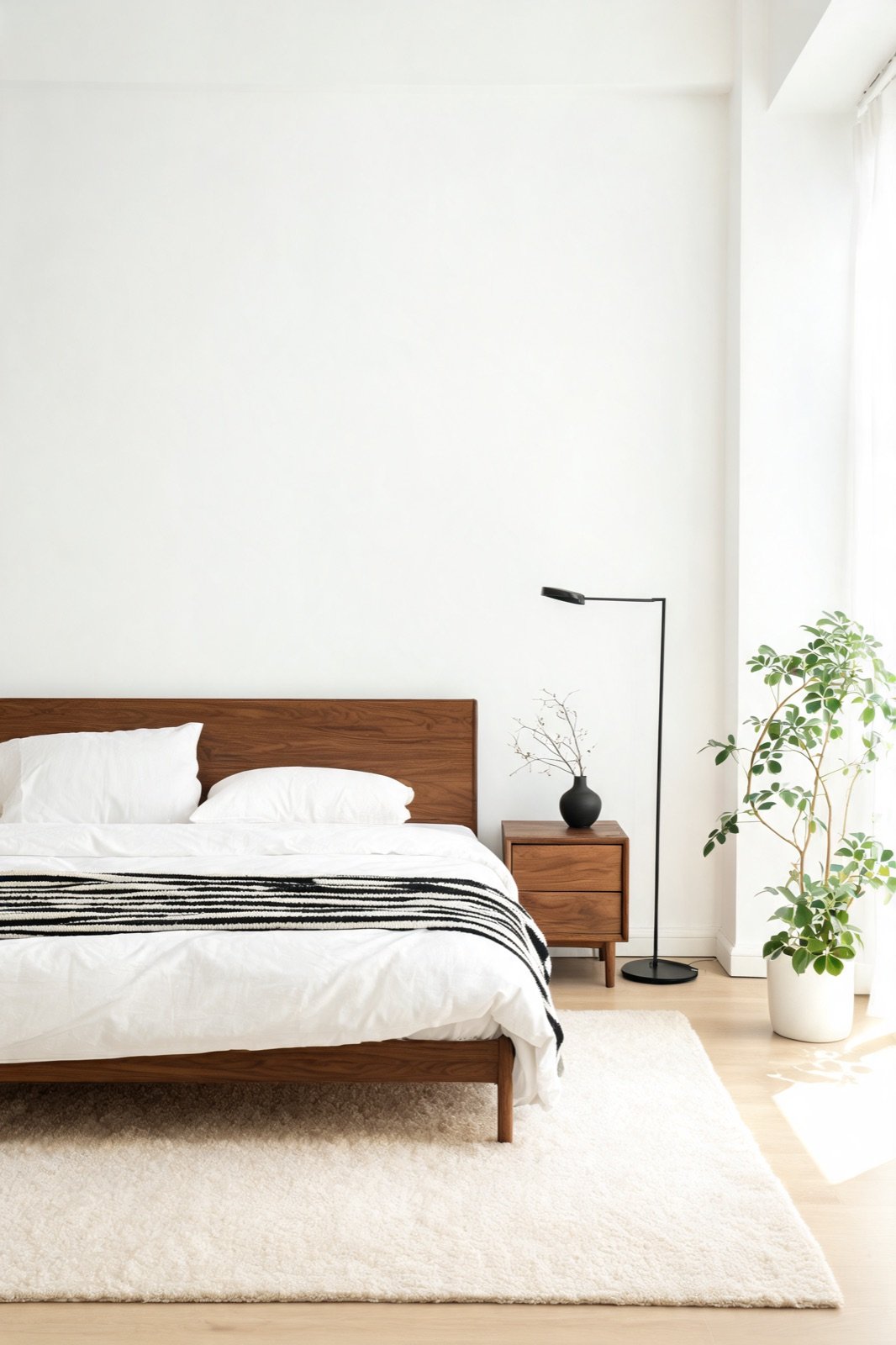
A black and white bedroom is striking, but it needs warmth or it feels like a gallery. Add a walnut or oak bed frame, a wool rug and a few plants.
Use black on one element at a time: a metal bed, picture frames or a lamp. White walls keep it light while the black adds shape.
8. Forest green and camel
For a moody, cozy room, paint the walls deep forest green and add camel or cognac tones. Think a leather bench, a tan wool throw and brass hardware.
This combination feels like a cabin in winter. Use warm 2700K bulbs, because cool light makes dark green look flat.

9. Try color drenching in one shade
A color drenching bedroom uses one color on the walls, trim, doors and even the ceiling. It sounds bold, but it makes a small room feel wrapped and calm because there are no hard lines.
Pick a mid-tone like clay, olive or slate blue. Then vary the finish: matte walls, eggshell trim. Bedding in a lighter or darker version of the same color keeps it from feeling flat.

10. Lavender and soft gray
Lavender is dreamy in a bedroom as long as you keep it dusty, not bright. Pair it with soft gray bedding and white trim.

Silver or nickel lamps fit this palette better than gold. If a full lavender room feels like a lot, start with lavender sheets and see how you feel.
11. Charcoal and mustard
This pairing is bold but easy. Charcoal walls make a mustard velvet pillow or a mustard throw glow. Keep the bedding white or light gray so the mustard stays a small, happy accent.
Two or three mustard touches are plenty. More than that and the room starts to feel like a sports team.

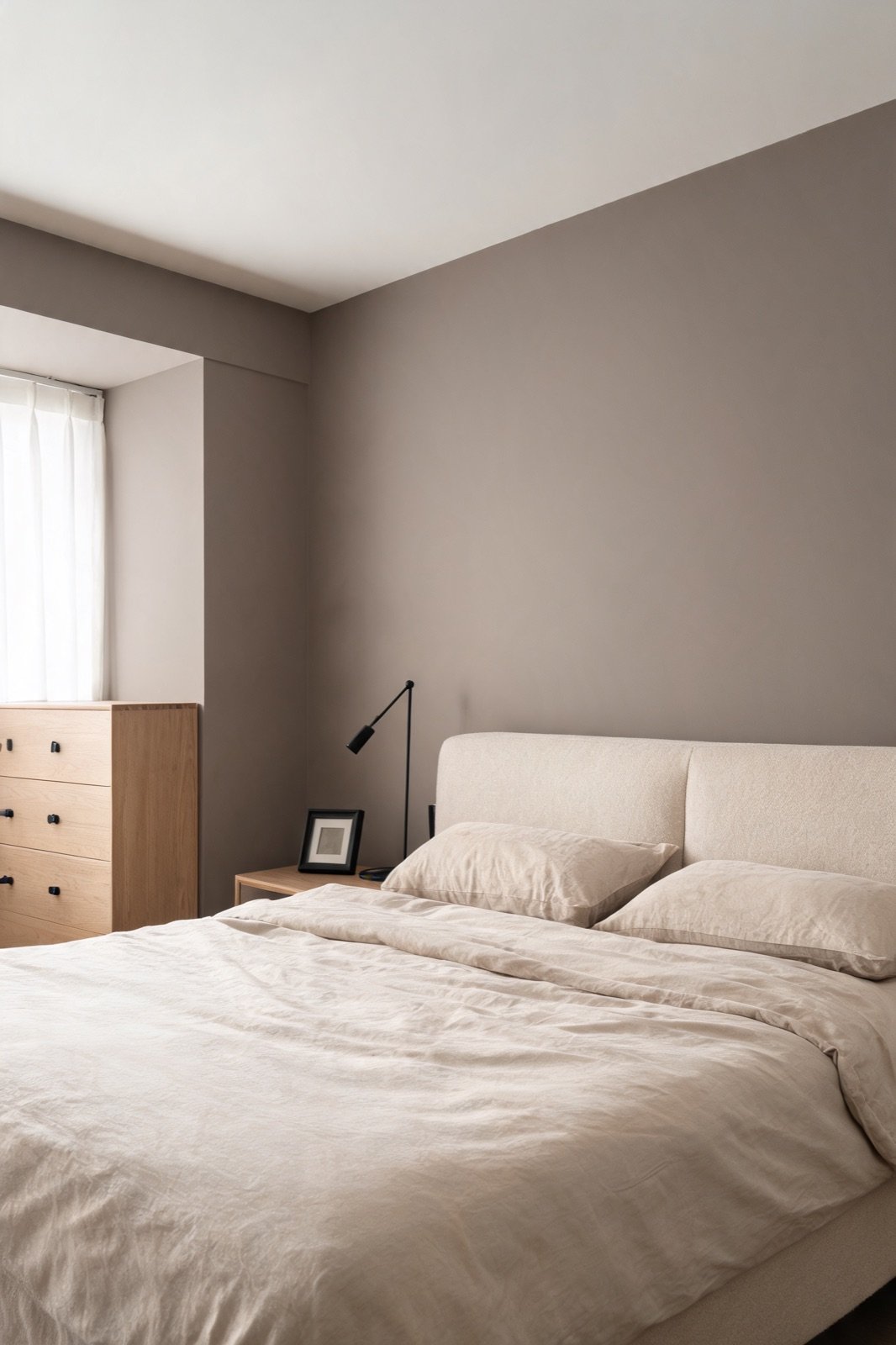
12. Mushroom, oatmeal and black
Mushroom is a soft brown-gray that’s warmer than gray and calmer than beige. Use it on the walls with oatmeal linen bedding and a few black accents like a thin metal lamp or frames.
It’s one of the most relaxing wall colors for people who think they hate color, and it hides scuffs far better than bright white.
13. Butter yellow and white
Soft, buttery yellow brings sunshine into a dim bedroom. Choose a pale, creamy shade, not a lemon one. Pair it with white bedding, light wood and a touch of soft gray.
It’s cheerful in the morning and still warm at night. A yellow ceiling with white walls is a fun twist.

14. Burgundy and blush
Deep burgundy with blush pink feels romantic and rich. Use burgundy on a velvet headboard, a quilt or one painted wall, then soften it with blush sheets and cream walls. Brass lamps help.
This palette is lovely in winter, and it’s surprisingly easy to calm down with lighter bedding in summer.

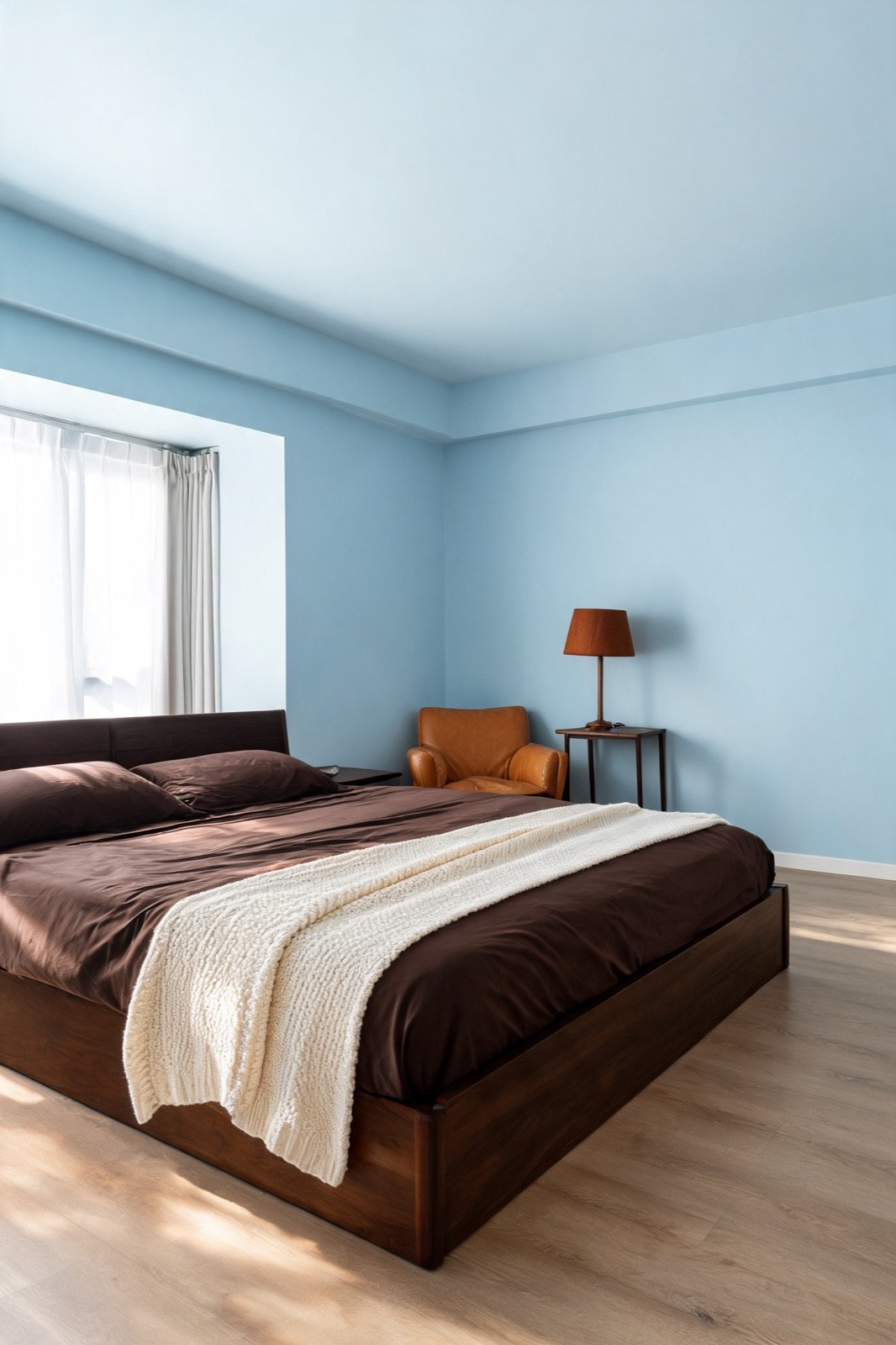
15. Chocolate brown and pale blue
Chocolate brown looks great with pale blue. Try chocolate bedding or a dark wood bed with pale blue walls. Add a leather chair or a cognac lamp shade.
The blue keeps the brown from feeling heavy, and the brown keeps the blue from feeling chilly. It’s a cozy, slightly retro look. A cream knit throw softens the whole thing if the brown starts to feel too dark.
How to build your own bedroom color palette
Build your palette around the things you can’t change. Look at your floor, your bed frame and the light from the window before you pick paint.
- Start with one fabric you love. A quilt, a rug or a print often has your whole palette in it already.
- Pick a wall color from its lightest shade. Then pull the 30 and 10 percent colors from the rest.
- Test samples on two walls. Check them morning and night.
- Repeat each color at least twice. One lonely blue pillow looks like an accident.
Small rooms can still take bold color, and dark walls often make them feel cozier. These small bedroom ideas cover the furniture side of that.
A few mistakes to skip:
- Choosing paint from a tiny chip. Colors look much stronger on a full wall.
- Using cool bulbs. Warm 2700K bulbs flatter almost every palette here.
- Forgetting the ceiling. A stark white ceiling can make a soft color look dingy. Try a warm white instead.
Color is only half of a restful room. Texture and light do the rest, and these cozy bedroom ideas show how to add both.
Common questions
What is the most relaxing bedroom color scheme?
Soft, muted colors like sage, dusty blue, mushroom and warm white are the easiest to relax in. Keep contrast gentle and lighting warm.
How many colors should a bedroom color palette have?
Three is a good number: a main wall color, a partner for bedding and curtains, and one accent for small pieces.
Is color drenching good for a small bedroom?
Yes. A color drenching bedroom has no sharp lines between walls, trim and ceiling, so a small room often feels cozier and calmer.
What wall colors work with gray floors?
Cool tones like dusty blue, sage and lavender sit well with gray floors. Add warm wood furniture so the room doesn’t feel cold.
Should my bedding match my walls?
No. Bedding should go with the walls, not match them. Pick a shade lighter or darker, or use your partner color.

One response to “Bedroom Color Combinations: 15 Palettes That Always Work”
[…] Test two or three samples on different walls and look at them in the morning and at night. Warm neutrals change a lot under lamp light. Need help pairing them? See our bedroom color combinations. […]