

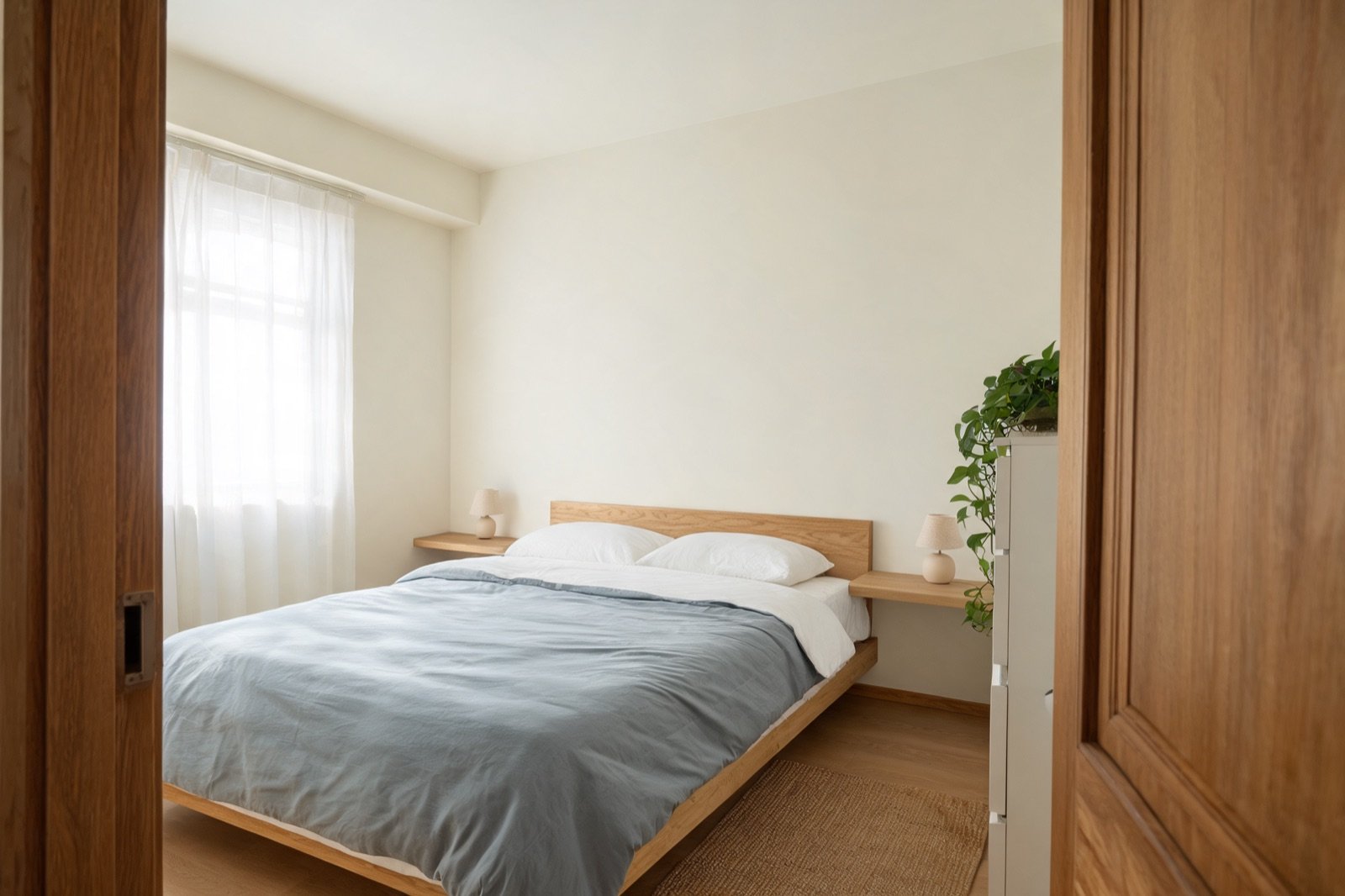
These small bedroom ideas are for anyone who opens the bedroom door and sees mostly bed. If your room is closer to a walk-in closet than a suite, you’re in the right place.
The good news: a tiny room can feel calm and roomy with the right layout, storage and a few visual tricks. Below you’ll find 21 bedroom ideas for small rooms, from furniture swaps to paint and lighting. Most cost little, and none need a contractor.
Pick three or four that fit your room and start there. You don’t need all 21 at once.
1. Push the bed against a wall
The fastest small bedroom layout fix is moving the bed off-center. Pushing one long side against a wall frees up a full walkway on the other side, which makes the whole room feel wider.
It works best for a single sleeper or a twin or full bed. If two people share the bed, see the couples tip further down.

2. Choose a bed with storage built in
Under the bed is the biggest storage spot in a small room, so use it on purpose.
- A platform bed with drawers holds sweaters, sheets and shoes.
- No budget for a new bed? Bed risers add 3 to 6 inches for rolling bins.
- Lidded bins keep the dust out. Open bins turn into a dust trap fast.

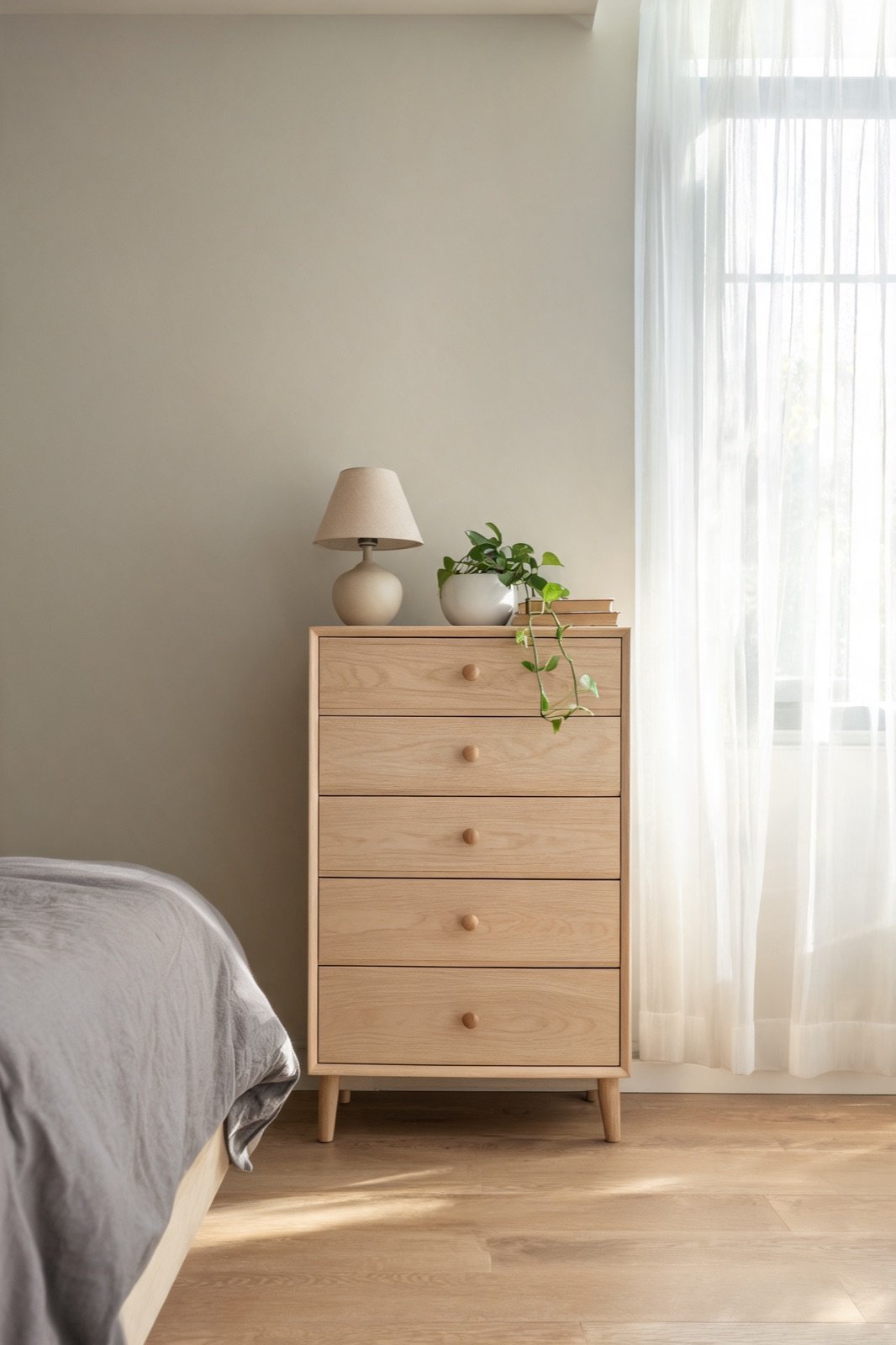
3. Go tall, not wide
A long, low dresser eats wall space you don’t have. A tall, narrow chest with five or six drawers holds about the same amount on a much smaller footprint.
Look for one around 30 inches wide or less. Anchor it to the wall with the anti-tip kit that comes with it, especially if kids live in the house.
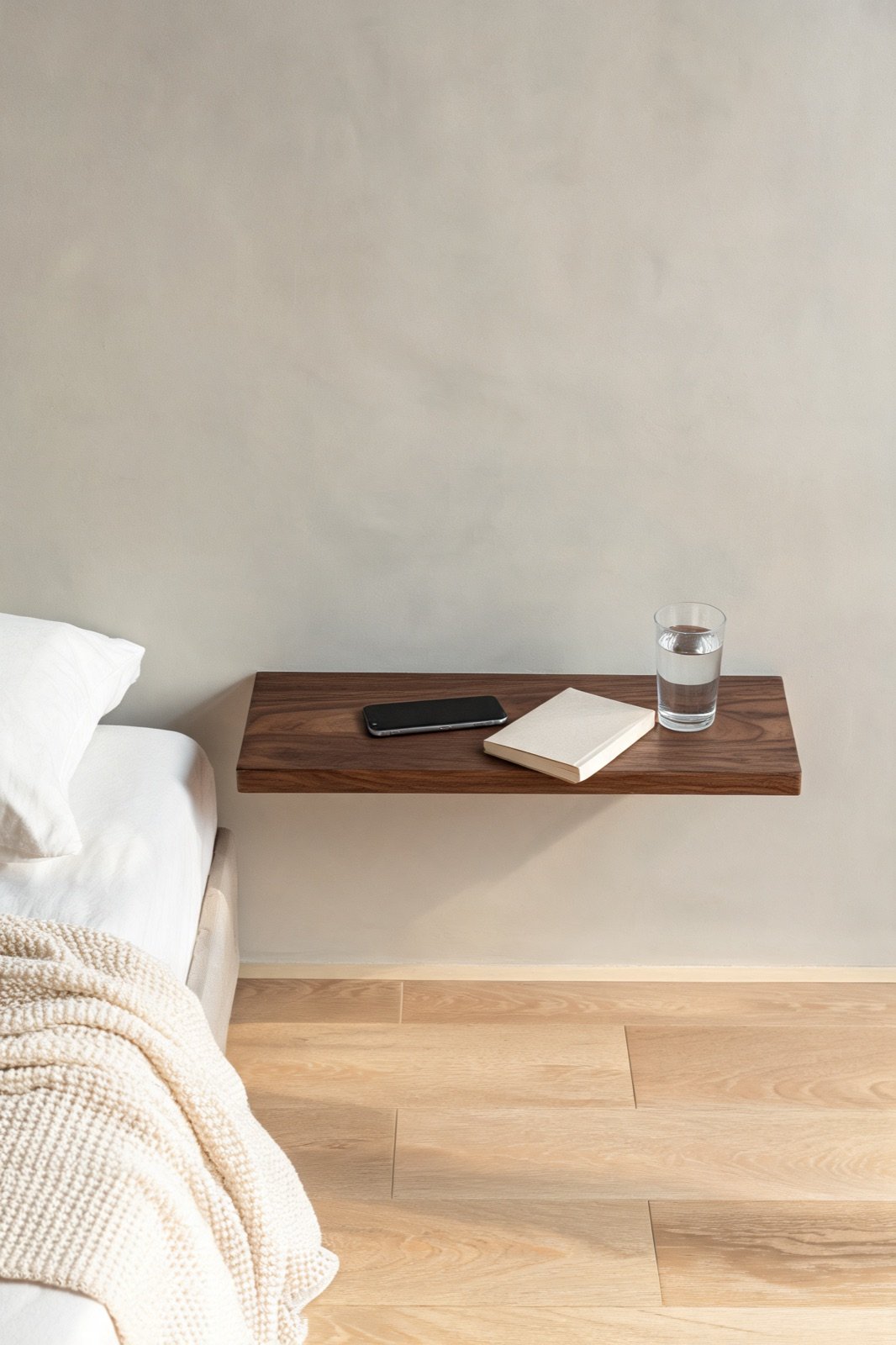
4. Swap nightstands for floating shelves
A bulky nightstand can block a narrow path to the bed. A floating shelf about 12 inches deep gives you room for a phone, a book and a glass of water without taking any floor space.
Renting? A small clamp-on bedside shelf or a slim C-table that slides under the bed frame works too.
5. Put your reading lights on the wall
Table lamps take up half of a small nightstand. Plug-in wall sconces give you reading light and clear the surface completely.
Choose ones with a cord and a plug, then tuck the cord into a paintable cord cover. No wiring, no electrician, and you can take them with you when you move.

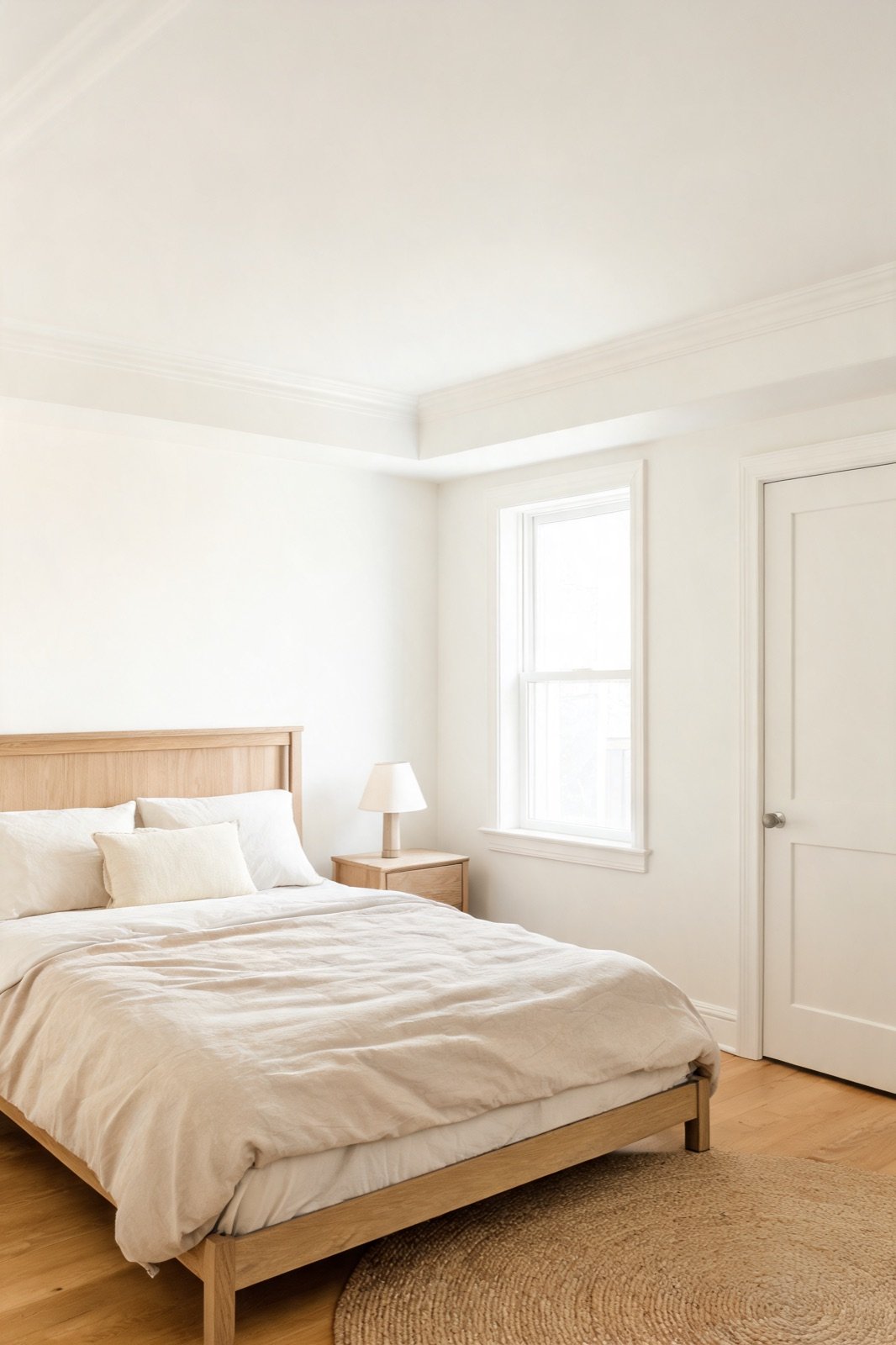
6. Paint the walls and trim one light color
Hard lines between wall, trim and ceiling chop a small room into pieces. Painting them all the same soft shade, like a warm white, pale greige or light sage, blurs the edges so the room reads as bigger.
Use a satin or eggshell finish on the walls. It wipes clean and reflects a little more light than flat paint.
7. Hang curtains high and wide
Mount the rod 4 to 6 inches below the ceiling and let it extend 8 to 12 inches past each side of the window frame.
When the curtains are open, they cover wall instead of glass, so you get more daylight and the window looks bigger. Choose panels that just kiss the floor. Light linen or cotton in a color close to the walls looks calmest.

8. Lean one big mirror
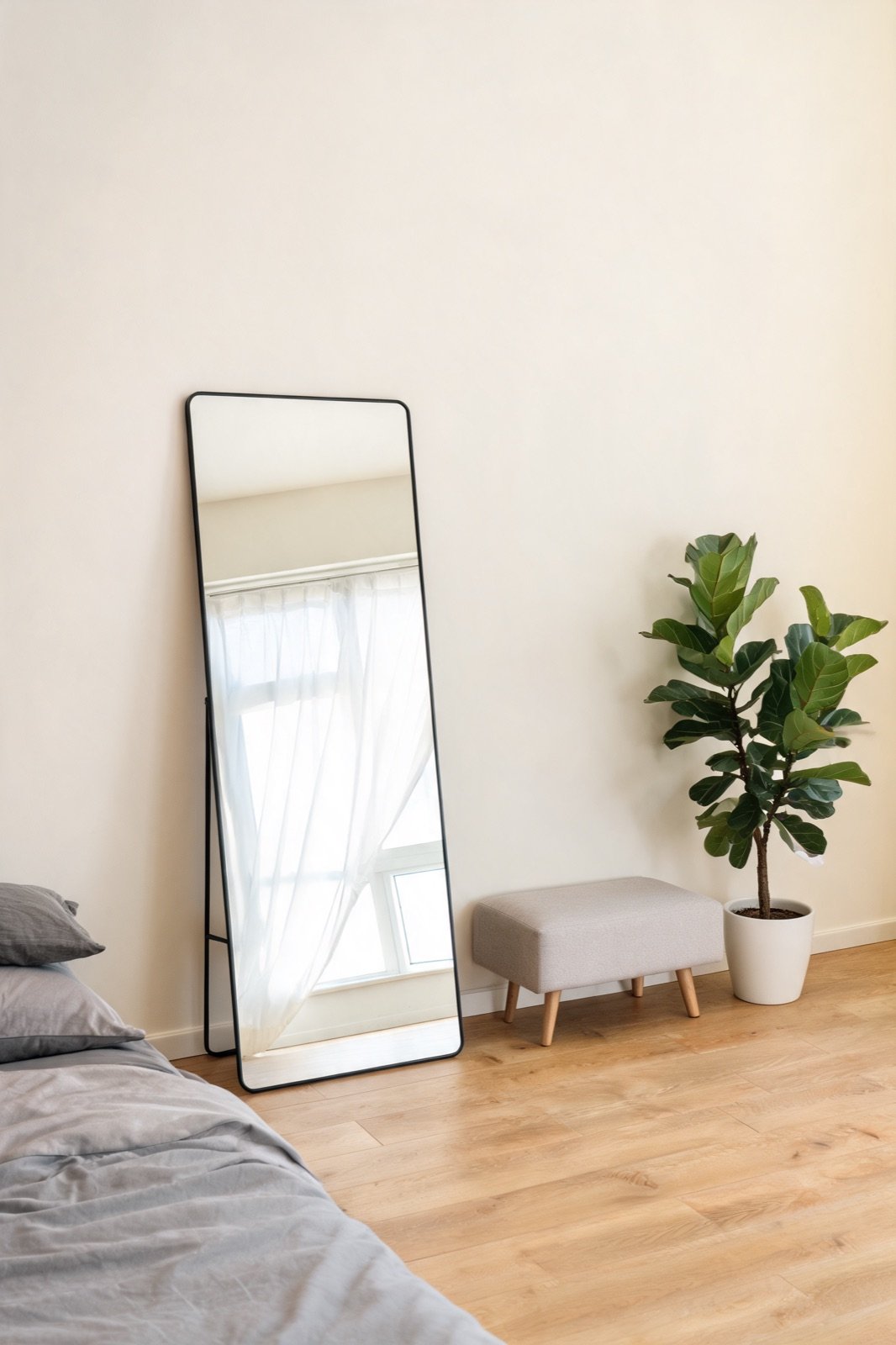
One large mirror does more than five small ones. Place a full-length mirror where it can catch the window and it bounces daylight across the room.
Floor mirrors are heavy and can tip. Secure the top to the wall with a mirror strap or anti-tip kit, even if it’s only leaning.
9. Pick furniture with legs
When you can see floor under a chair, dresser or bed, your eye reads the room as roomier. Furniture that sits flat on the floor feels heavy and blocky.
Look for tapered wood legs or slim metal frames. A raised bed frame also lets light reach the floor, as long as you keep what’s under there neat.

10. Rethink the headboard
Big upholstered headboards add 4 to 6 inches to the bed’s length, which matters in a tight room. Try a slim wall-mounted panel instead, or skip it entirely.
A cheap option: paint a soft arch or a rectangle on the wall behind the bed. It frames the bed like a headboard and costs one sample pot of paint.

11. Use the wall above the door
The strip above a door is almost always empty. A sturdy shelf mounted there holds books, spare pillows or a few lidded boxes you don’t need every day.

Mount it into studs with proper brackets, and keep heavy or breakable things off it. This is storage for light, rarely used stuff.
12. Work the back of the door
The back of the bedroom door is free real estate. An over-the-door rack with hooks holds robes, bags and tomorrow’s outfit.
- Over-the-door hooks for robes and towels
- A clear shoe organizer for scarves, belts and socks
- Removable adhesive hooks for renters, so nothing gets drilled

13. Size the rug up, not down
A tiny rug floating in the middle of the floor makes a small room look even smaller. A bigger rug that runs under the bed does the opposite.
For a full or queen bed in a small room, a 5×8 rug turned sideways under the bottom two-thirds of the bed works well. You want soft rug on both sides when your feet hit the floor.

14. Stick to a three-color palette
Too many colors make a small room feel busy and crowded. Pick three: a main wall color, a second color for bedding and curtains, and one accent for pillows or art.
Try warm white, oatmeal and terracotta, or soft gray, white and dusty blue. Repeat each color at least twice in the room so it looks planned.

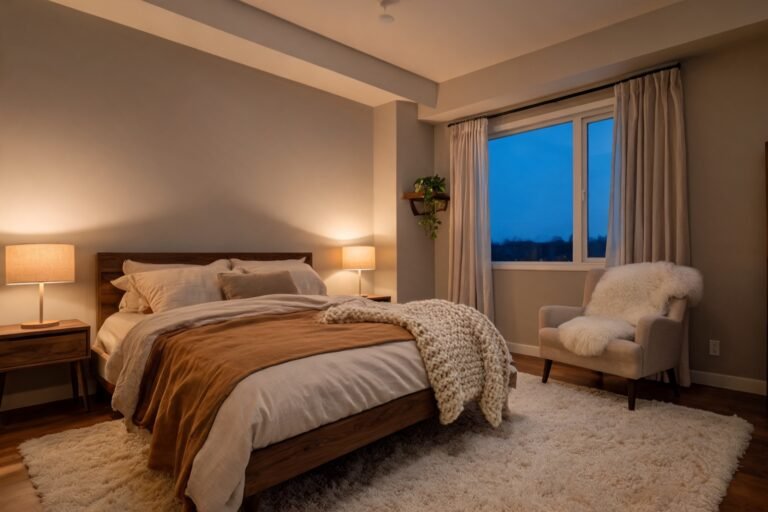
15. Layer textiles for a cozy small room
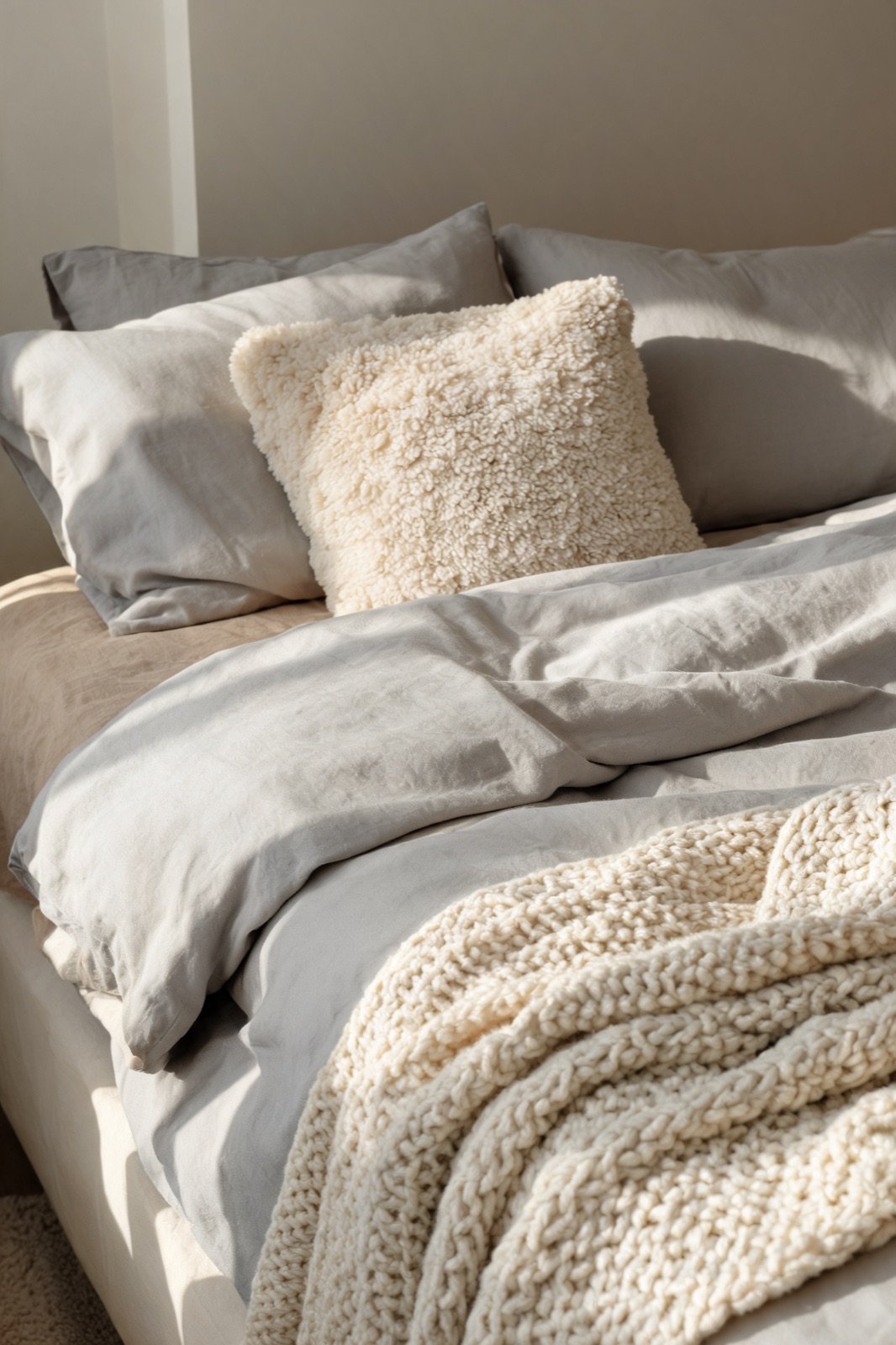
Texture is how a tiny room gets cozy without adding a single piece of furniture. Mix two or three materials on the bed and stop there.
- A chunky knit throw folded at the foot of the bed
- Two sleeping pillows plus one or two decorative ones, not seven
- Washed linen or brushed cotton sheets
For more ways to warm things up, our cozy bedroom ideas go further.
16. Edit your small bedroom decor
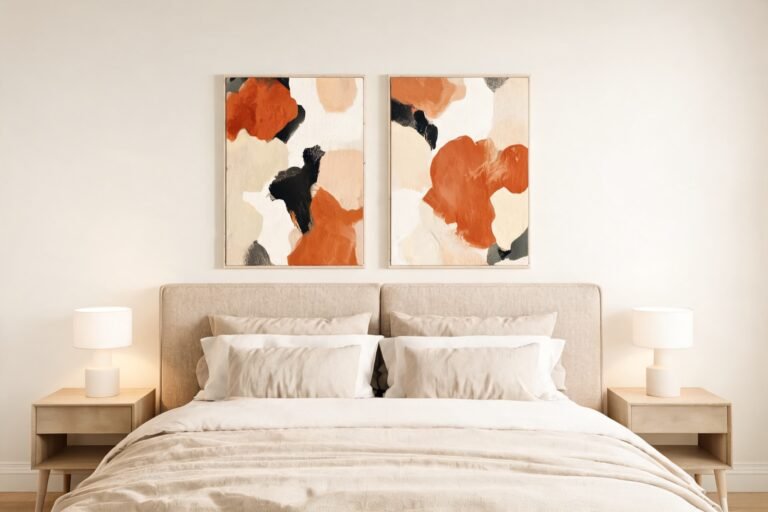
Small bedroom decor works best with fewer, bigger pieces. One large print above the bed (acrylic, not glass, hung into a stud) looks calmer than a gallery wall of ten tiny frames.
Keep surfaces mostly clear: a lamp or plant on the dresser and a small tray for jewelry. If you want ideas for that one big wall, see our bedroom wall decor ideas.

17. Try a daybed in very small bedrooms
In a very small bedroom, the bed decides everything. Under about 80 square feet, a full bed (54×75 inches) leaves only a thin strip of floor around it.
A daybed pushed into a corner works as a sofa by day and a bed by night. A twin XL (38×80 inches) gives a tall sleeper extra length without extra width. For kids or teens, a loft bed opens up space underneath for a desk or reading nook.

18. Plan for two in a small room
Small bedroom ideas for couples come down to fairness. Each person needs a spot for a phone, a light and a place to climb out of bed.
- Center the bed so both sides get a walkway: 24 inches is comfortable, 20 is the bare minimum
- Two slim floating shelves instead of one shared nightstand
- Split the dresser: top drawers for one, bottom for the other

19. Add a fold-down desk
If your bedroom doubles as an office, skip the full desk. A wall-mounted fold-down desk sticks out only a few inches when it’s closed and gives you a real work surface when it’s open.
Pair it with a stool that tucks underneath. A small clip-on lamp is enough for evening work.

20. Hide the clutter in closed storage
Open shelves look pretty in photos but show every bit of mess. Closed storage keeps a small room feeling calm.
Use matching woven baskets on shelves, lidded boxes on top of the wardrobe and drawer dividers inside. A $10 dollar-store basket in the same color as its neighbors looks far more expensive than a mixed set.

21. Keep the floor clear every night
In a tiny room, one pile of clothes on the floor makes everything look messy. A five-minute reset before bed keeps the floor clear.
Put a lidded hamper in the closet or a corner, add two hooks for worn-once clothes and give every bag a spot. The less floor you cover, the bigger the room feels.

Mistakes to avoid in a small bedroom
A few common choices make tiny rooms feel even tinier. Watch out for these:
- Buying before measuring. Measure the room, the door and the path to the bed. Keep at least 24 inches of walkway where you can.
- A matching furniture set. Skip the six-piece bedroom set. It always looks like a store display and usually includes pieces you don’t have room for.
- Dark, heavy curtains hung low. They pull the ceiling down and block light.
- Sizing up the bed because it’s on sale. A queen is 60×80 inches and a king is 76×80. Those extra 16 inches of width are the walkway you’ll miss every morning.
- Blocking the window. Keep tall furniture away from it so daylight reaches the whole room.
Not sure where everything should go? Our guide to bedroom layout ideas walks through layouts that work in real rooms.
Common questions
What is the best bed size for a small bedroom?
For rooms around 10×10 feet, a full or queen works if you keep other furniture slim. Under about 80 square feet, a twin, twin XL or daybed leaves you room to move.
Where should the bed go in a small bedroom layout?
Against the longest wall, or pushed into a corner for one sleeper. Try not to block the door or the window, and leave a clear path from the door to the bed.
How can I make a small bedroom look bigger?
Use one light paint color, hang curtains high, add a large mirror, choose furniture with legs and keep the floor clear. Those five changes do the most.
What colors work best for a small bedroom?
Soft, light colors like warm white, pale sage, light greige and soft blue make walls feel farther away. A darker accent on pillows or one piece of art adds depth.
How do I add storage to a small bedroom with no closet?
Use a storage bed, a tall dresser, a freestanding clothes rack, over-the-door hooks and a shelf above the door. Lidded baskets keep it all looking tidy.

2 responses to “Small Bedroom Ideas: 21 Smart Ways to Make a Tiny Room Work”
[…] Swap nightstands for a floating shelf and plug-in wall sconces. Under-bed bins hold your own things, and over-the-door hooks replace a closet. For more tricks, see our small bedroom ideas. […]
[…] with a tiny room? Our small bedroom ideas show how to fit all this in without crowding. And if the holidays are coming, our Christmas bedroom […]